Menu

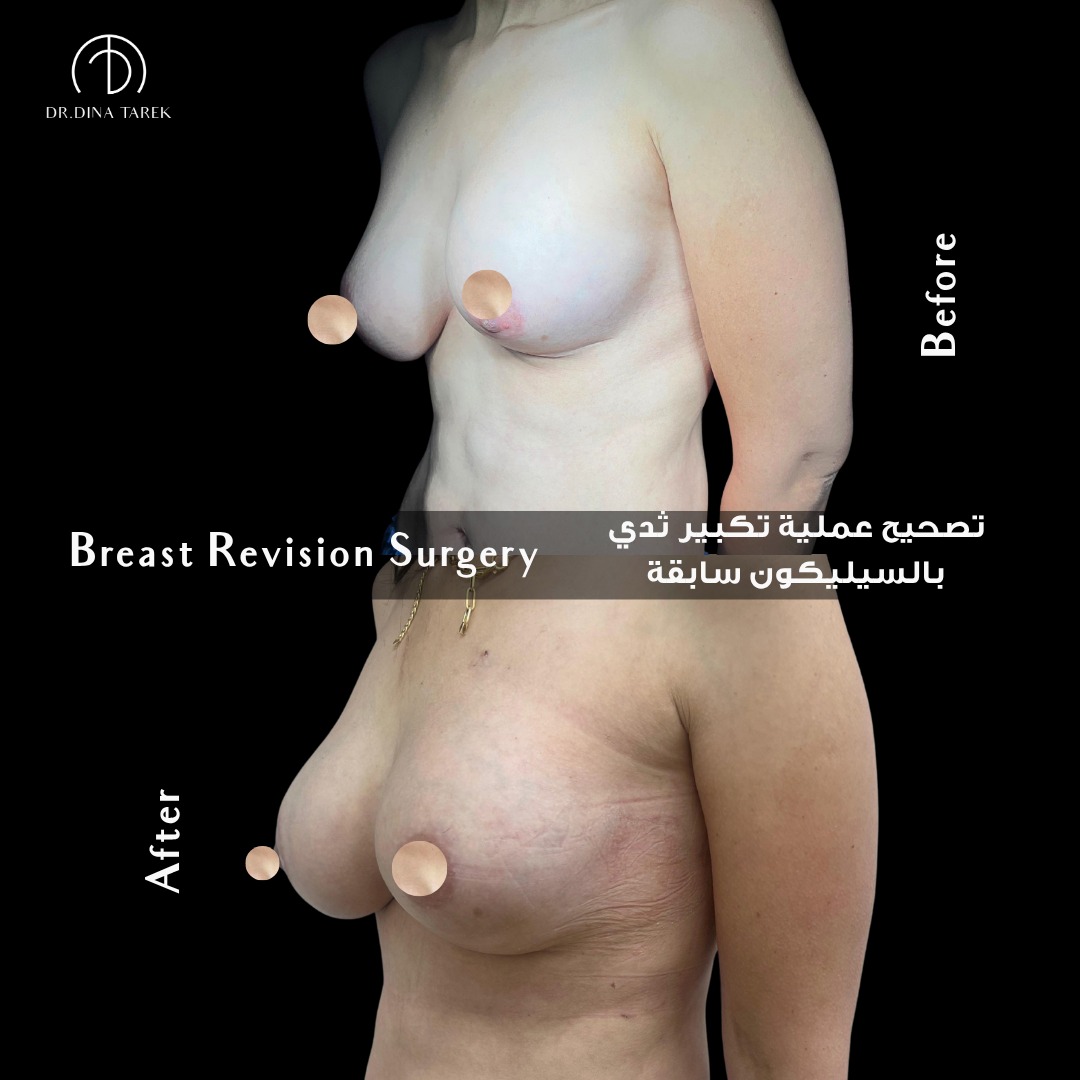
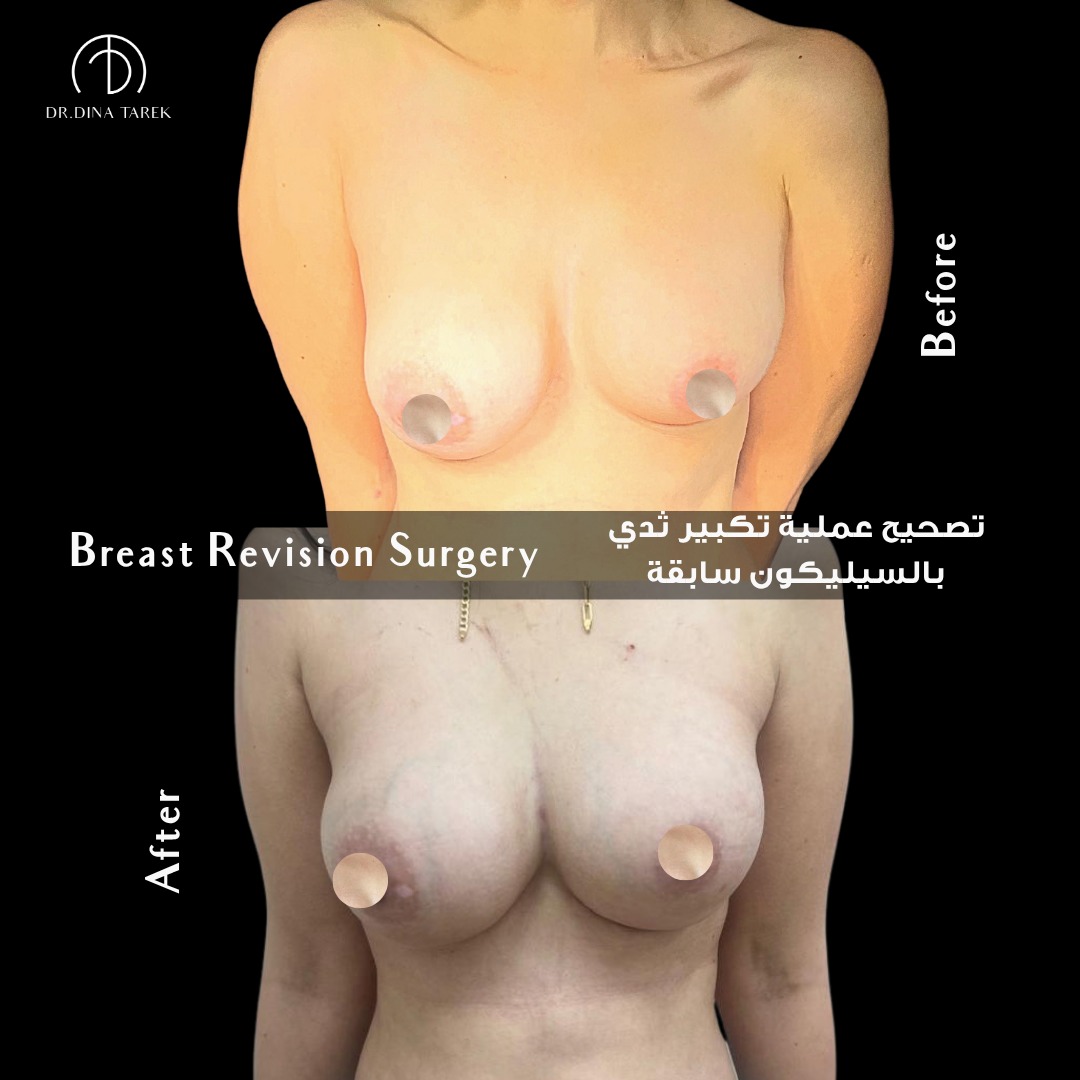
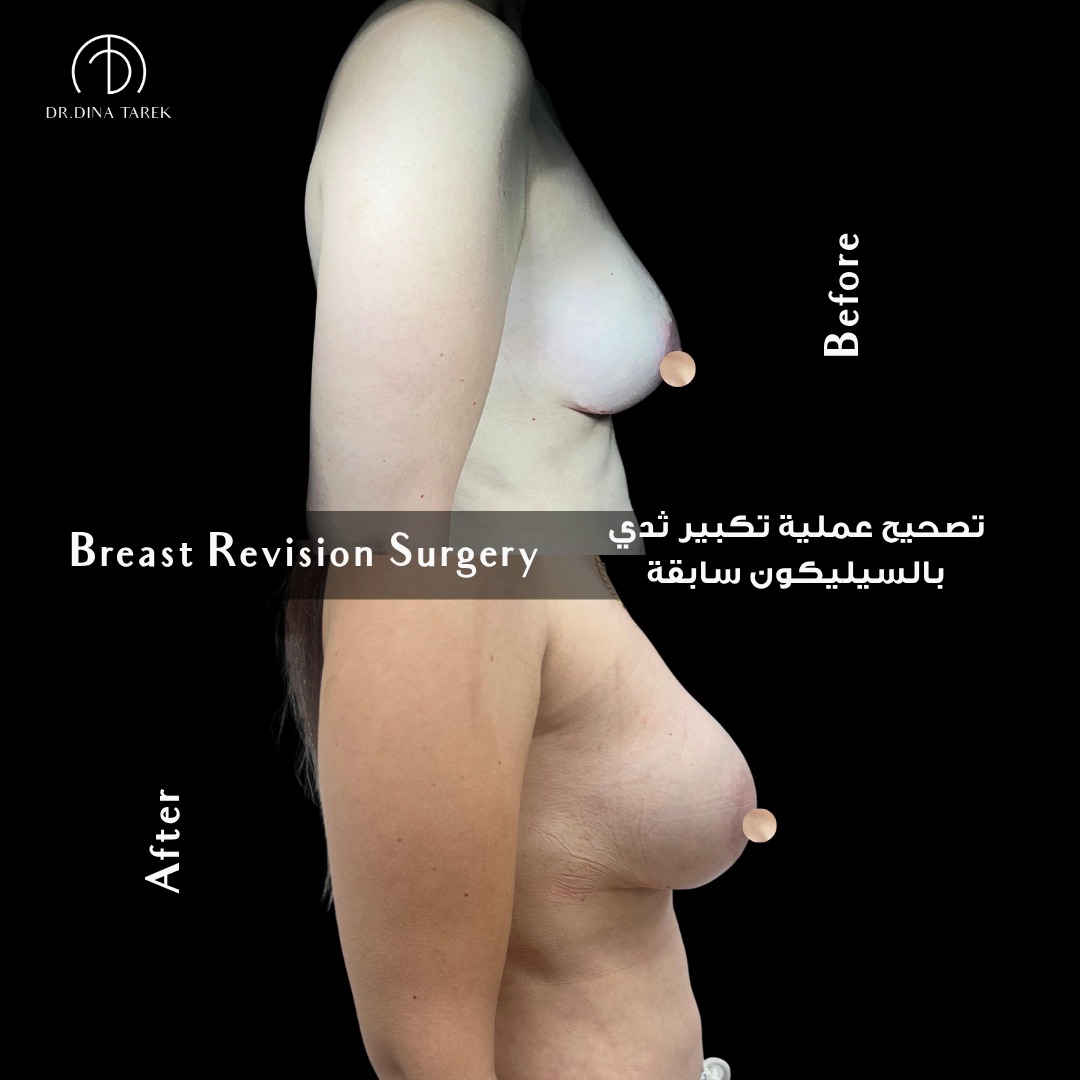
Breast Revision Surgery is a plastic surgery procedure to correct previously performed breast surgery usually involving implant problems, implant pocket problems like lateral displacement and bottoming out, implant size issues, capsular contracture (hard scar tissue around the implant) or revision of the breast skin envelope with breast lift or breast lift revision. These surgeries are extremely challenging and require detailed analysis of breast anatomy and extensive experience and technical skill.

Breast Revision Surgery is a plastic surgery procedure to correct previously performed breast surgery. As breast revision surgery varies from patient to patient depending on their individual anatomy and concerns, each revision surgery is specifically tailored to each patient. Because there are anatomic changes and deformities created as a result of the previous surgery, a detailed analysis of breast anatomy is critical as well as experience with breast revision surgeries to tackle complex problems.
The most common complications that I see patients who have had previous breast augmentations surgery with implants are implant pocket problems like lateral displacement and bottoming out, implant size issues, or capsular contracture (hard scar tissue around the implant). Symmastia where the implants cross chest midline is also a breast implant problem I have treated. Patients also have complications or issues with previous mastopexy surgeries where the breasts are persistently droopy, asymmetric, there are lift scar problems, or the areola are asymmetric, irregular or have abnormal placement (too high, too low, or off center).
Some of the most common reasons for getting a Breast Revision Surgery are:
•Wrong Size Implants – Some women who undergo breast augmentation may want to increase or decrease the size of their breasts. Sometimes the initial implants are too wide and low, or don’t fit their frame. Sometimes there are two different sized implants resulting in asymmetry.
•Capsular Contracture or Scarring – Capsular contracture is where hard scar tissue forms around the implants causing the breasts to be hard, distorted or asymmetric.
•Implant Pocket Problem/Improper Placement – The pocket is to wide so implants fall to the side, bottoming out where the implant slips under the fold, symmastia where the implants cross midline
•Breast Asymmetry – Although most women have some natural asymmetry, following breast augmentation some women may notice that their breasts are significantly uneven, an issue that can be improved.
•Nipple and Areola asymmetry or size problem – Some women have asymmetric nipples, oddly shaped areola, or are unhappy with the size. Often the nipples are too high, too low, or off center or too large
•Persistent breast ptosis – Some women after having breast augmentation or after a breast lift still have droopiness of their breasts needing a revision of the the lift or a different type of lift
•Breast lift scar problems – After previous breast lift, some women have irregular or wide scars, or abnormal contours from the scars.
I have performed many breast revision surgeries to correct various breast augmentation or breast lift problems. I believe that the key to any breast surgery is communication – being a good listener so I can understand what my patients hope to achieve, and also my taking the time to answer questions and set realistic expectations on what can and cannot be fixed with surgery. It is extremely important and helpful for surgical planning for you to get your previous operative reports and also implant information. Also – as previous surgeries may have created irreparable damage or anatomic changes, it is important to understand that revisions are challenging and require an experienced surgeon to tackle these complications.
As I’ve mentioned before, plastic surgery is not an exact science. Every person has a unique anatomy and their own idea of what their body goals should be. This is why consultations are vital so we can work together to create the best possible plan, customized for your personal needs and goals.
I will do a detailed consultation, take a complete medical history and conduct a careful examination and develop a customized plan based on your anatomy as well as your aesthetic goals. I consider age, overall health, emotional well being, as well as expectations for surgery when evaluating a candidate for this procedure. Patients who are obese (BMI 30 or greater) or who smoke have a significantly higher risk of wound healing problems. I require patients to have stopped smoking for anywhere from 2 months to a year depending on their smoking history before having surgery. To minimize the possibility of excess bleeding, you will need to avoid taking drugs containing aspirin, anti-inflammatories, alcohol, or herbal medications two weeks before surgery. You will receive a complete list of medications to avoid and detailed instructions before surgery. I consider the preparation before surgery and your understanding of how to take care of yourself critical to having the best possible results so myself and my staff will walk you through each part of the process every step of the way.
For your comfort and safety, breast revision surgery will be performed under general anesthesia. I believe that every part of the surgical team is essential to having a perfect and smooth surgery so every part of my extended team is focused during surgery, and pays attention to every detail. We will all ensure that as you enter the operating room and are gently placed under anesthesia you will feel relaxed and calm and excited. During the operation we will all be focused on keeping you warm, comfortable, and cared for. During the surgery, I am gentle and respectful and ensure a positive and calm environment around you. I will also place a numbing solution in your breasts so you will not feel pain even though you are under anesthesia.
The surgery may take 3 to 7 hours depending on complexity, anatomy, and what needs to be repaired. I will make a precisely calculated incision usually using your previous surgical incision. If there is an implant problem, the old implant will be removed and replaced. If there is a pocket problem it will be repaired with sutures and sometimes with an internal support tissue. All repairs will be performed to restore anatomy as best as possible and create an aesthetic improvement. I take extreme care to be very gentle and to keep the pocket clean with little to no bleeding. I create and test the pocket using a temporary sizer which is a replica of the implant used for adjustments, and then when both pockets are symmetric and perfect, the entire field will be re-prepared for final implant placement. The implants will be placed using a no-touch technique. After the implants are placed, any lift revisions will be made and if needed the areola will be adjusted and re-sized.
The entire procedure will be done precisely and meticulously to create the best possible scars and best possible results.
I have developed a special technique in my breast surgeries that have minimal pain and a quick recovery. You will feel tightness and some soreness in the breast area especially if there were internal sutures placed and there will be swelling. The swelling usually lasts about a month. If you do have discomfort, tylenol is usually all that’s needed. You will need to minimize arm movement for about 2 weeks and you will wear a supportive bra for 2 months after surgery. This is something we will measure and provide for you. Depending on what was done in your revision breast surgery you may have drains placed that are removed usually after a week. Most of my patients feel almost back to normal at around 1 week after their breast augmentation surgery. Moderate exercise such as walking or stationary biking is allowed after two week. Vigorous exercise such as jogging or aerobics may be resumed in 4 weeks. You will most likely be able to return to work within a few days, but you will need to avoid any strenuous activity for at least a couple of weeks.
Scars take about 12 months to fade. You will start scar treatments at around 2 weeks after surgery. I will discuss scar care in detail with you and also provide you with scar medications and products.
2021 © جميع الحقوق محفوظة للدكتورة دينا طارق